EV Charging Stations · EVCar Data Desk
What Does Home Charging Really Cost in the EQS 580?
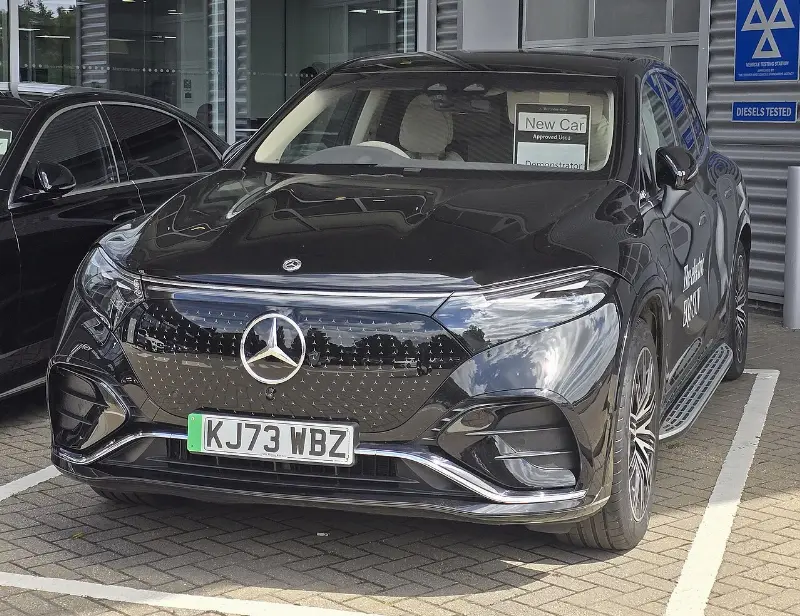
For a buyer who can charge at home, the 2027 Mercedes-Benz EQS 580 4matic looks inexpensive to run. Using the EPA combined efficiency of 112 MPGe and the U.S. residential electricity price of 18.1600 cents/kWh, the estimated home-charging cost is 5.47 dollars per hundred miles. The cost of a full-range charge is 23.74 dollars. These are estimates from average electricity pricing, not quotes from your utility.
Key Findings
- The EPA rates this model at 112 MPGe combined and an EPA range of 434 miles.
- The EPA energy-use figure is 30.1 kWh per hundred miles.
- At the average residential rate of 18.1600 cents/kWh, charging costs about 5.47 dollars per hundred miles.
- Charging across the full EPA range is estimated at 23.74 dollars.
- The cost figures depend on an average electricity price. Your local rate, time-of-use plan, and driving habits will change the result.
How the Per-Mile Cost Is Built
The per-mile figure starts with efficiency. EPA rates the EQS 580 4matic at 112 MPGe, which is a test-cycle rating used to compare electric vehicles with each other and with gasoline cars. From that rating, the EPA energy-use figure is 30.1 kWh per hundred miles. Multiplying that energy use by the residential price of 18.1600 cents/kWh gives the 5.47 dollars per-hundred-mile cost. The per-mile cost is that hundred-mile figure divided by one hundred, so the cost of each mile is a small fraction of a dollar.
Because the price input is a national average from the EIA, the result is a planning estimate. Electricity in your area may cost more or less, and some utilities charge different rates by time of day.
What a Full-Range Charge Costs
The full-range charge cost is 23.74 dollars. It applies the same energy and price assumptions to the EPA range of 434 miles. This is the figure most useful for comparing running costs over a typical driving range, and it is easy to set against the price of gasoline in your area.
The number is not a promise. Real-world consumption depends on speed, temperature, terrain, use of climate control, tire condition, and driving style. EPA ratings are standardized test results, so your actual range and energy use may be lower or higher.
Who Home Charging Suits Best
The low per-mile cost matters most to buyers who can charge at home every night or on most days. If you can plug in overnight, you avoid most public charging and can benefit from the residential price in the estimate. Buyers without a dedicated charging location, or who rely heavily on public chargers, should not treat the home-charging numbers as their operating cost. Public charging prices are set by each network and are not covered by this data.
Renters and apartment dwellers should confirm whether charging is available before using these figures. The estimate assumes you can charge where you park.
Limits of the Available Data
The supplied facts cover EPA efficiency, EPA range, the EIA residential price, and the derived home-charging costs. They do not include battery capacity, charging speeds, public charger prices, insurance, maintenance, or depreciation, so this article does not compare total ownership cost. It also does not include a head-to-head comparison with other vehicles, because competitor figures were not part of the provided data.
The EIA price is a residential average. It is not a forecast, and electricity prices can change over time.
Checking Recalls Before You Buy
This article does not report a recall count for the EQS 580 4matic. Check the vehicle identification number (VIN) of any specific car on nhtsa.gov before purchase. Recall records are tied to individual vehicles and model years, and a search by VIN gives the most accurate status for a given car.
Summary Table
| Measure | Value | What it means for a buyer |
|---|---|---|
| EPA combined efficiency | 112 MPGe | Test-cycle efficiency rating used to compare EVs |
| EPA range | 434 miles | Standardized test range, not a guaranteed real-world figure |
| EPA energy use | 30.1 kWh per hundred miles | Energy drawn from the outlet per hundred miles, per EPA test |
| U.S. residential electricity price | 18.1600 cents/kWh | National average from EIA; local rates will differ |
| Home-charging cost per hundred miles | 5.47 dollars | Estimated cost of hundred-mile driving at home |
| Full-range charge cost | 23.74 dollars | Estimated cost to charge across the EPA range at home |
Frequently Asked Questions
How much does home charging cost per hundred miles?
Using the EPA energy use and the EIA average residential price, the estimate is 5.47 dollars per hundred miles.
What is the estimated cost of a full-range charge?
The estimate is 23.74 dollars, based on the EPA range of 434 miles.
What electricity price does the estimate assume?
It assumes the U.S. residential average of 18.1600 cents/kWh from EIA. Your local rate may be higher or lower.
Does the EPA range guarantee real-world results?
No. EPA range and efficiency are standardized test values. Real-world results vary with driving conditions and habits.
Conclusion: Is Home Charging a Good Value?
For a buyer with reliable home charging, the cost estimates are the strongest part of this data. The EQS 580 4matic's EPA efficiency of 112 MPGe produces a home-charging estimate of 5.47 dollars per hundred miles. The main caveat is that the estimate depends on a national electricity average and standardized test values. Before buying, confirm your local electricity rate, check the VIN for recall status on nhtsa.gov, and compare the estimate with the charging options you will actually use.
Data Sources
- U.S. Environmental Protection Agency (EPA), fueleconomy.gov vehicle dataset (https://fueleconomy.gov/feg/epadata/vehicles.csv), retrieved 2026-11-16. Used for combined MPGe, EPA range, and energy use per hundred miles for the 2027 Mercedes-Benz EQS 580 4matic.
- U.S. Energy Information Administration (EIA), residential electricity price series ELEC.PRICE.US-RES.M (https://api.eia.gov/v2/seriesid/ELEC.PRICE.US-RES.M), retrieved 2026-11-12 for the price input and 2026-11-16 for the derived charging-cost figures.