EV Maintenance Tips · EVCar Data Desk
Before You Buy the ID.4, Run Through This Checklist
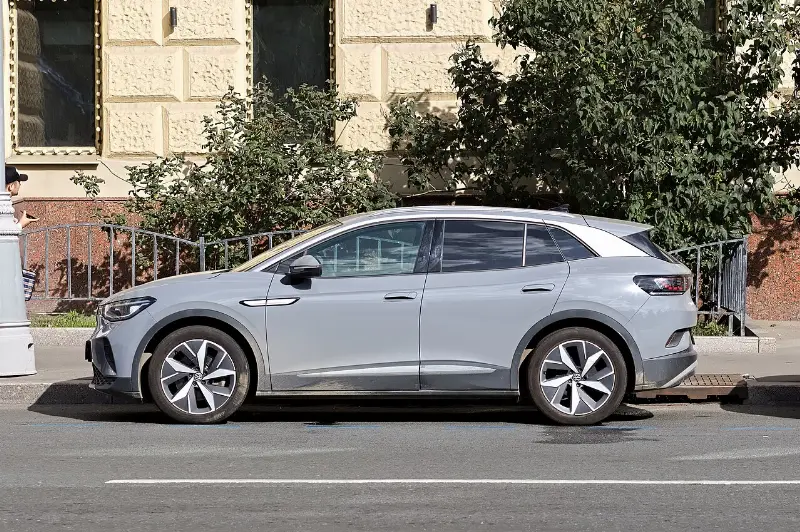
The 2026 Volkswagen ID.4 2WD is worth a close look if efficiency and home charging matter more to you than the longest possible range. Its EPA range is 291 miles, which places it in the lower half of the 2026 battery-electric records in the EPA dataset, while its combined efficiency of 113 MPGe is well above the field median. Before you commit, use the checklist below to confirm the charging setup, verify recall status by VIN, and plan routine care around the owner's manual rather than generic advice.
Key Findings
- Range trails the market median. The EPA range of 291 miles ranks #190 of the 2026 battery-electric records, against a median of 297 miles.
- Efficiency is a relative strength. Combined efficiency of 113 MPGe ranks #48, above the 91 MPGe median.
- Home charging is the main ownership cost lever. EVCar's estimate of annual home-charging cost is 650 dollars at the latest EIA U.S. residential electricity price.
- Two recall campaigns are on file. NHTSA lists 2 recalls across all trims as of the retrieval date. This is a count of campaigns, not a reliability score.
Range: What the EPA Number Does and Does Not Tell You
The EPA rating of 291 miles comes from a standardized test cycle. It is a useful basis for comparing vehicles, but it is not a prediction of what you will get on your own commute, in your climate, or at highway speeds. Buyers who regularly drive long distances should treat the number as a starting point and plan charging stops accordingly.
Against the market, the ID.4 sits below the 297 miles median. For a daily commuter who charges at home, that gap may not matter. For someone who wants to cover long highway stretches without stopping, it is a real consideration, and the ranking makes that trade-off clear.
Efficiency and Home Charging Costs
The EPA data separates city and highway efficiency. City efficiency is 122 MPGe, and highway efficiency is 104 MPGe. The gap reflects how energy use changes with driving conditions, so your mix of city and highway driving will shape your real-world efficiency more than the combined figure alone.
The combined rating of 113 MPGe ranks #48 in the market and sits above the 91 MPGe median. That positioning is the strongest part of the ID.4 profile. The estimated home-charging cost of 650 dollars per year uses the latest EIA residential electricity price and the mileage assumption in EVCar's calculation. Your actual bill will depend on your local utility rate, your driving, and your charging habits.
Charging Checklist
- Confirm your home setup. The EPA's 240-volt charge time for this vehicle is 8.00 hours. Check whether your home or garage can support a Level 2 charger before you buy.
- Plan overnight charging. A full-charge window of that length fits most overnight schedules, but confirm it with your typical daily mileage.
- Know your public charging options. Identify fast-charging locations along the routes you drive most often, since the range figure limits how far you can go between stops.
- Review your electricity rate. Time-of-use plans can change the cost of charging, so compare your utility's rates against the EIA-based estimate.
Recall Checklist
NHTSA lists 2 recalls for the 2026 ID.4 across all trims, based on the retrieval date. A recall count tells you that campaigns exist in the database. It does not show whether a specific vehicle is affected, whether repairs were completed, or how reliable the model is over time.
- Look up the specific vehicle's VIN on nhtsa.gov to see whether any open campaigns apply to that car.
- Ask the dealer to confirm in writing that all open recall work has been completed before you buy a used example.
- If you already own the vehicle, check recall status periodically, since new campaigns can be added after the retrieval date.
Routine Maintenance Checklist
The supplied facts do not include service intervals, warranty terms, or repair prices, so this checklist focuses on what you can verify yourself.
- Read the owner's manual for the manufacturer's scheduled service and inspection intervals.
- Ask the dealer for the current warranty terms in writing, including battery coverage, rather than relying on general assumptions.
- Inspect tires, brakes, and suspension components at the intervals listed in the manual, since electric SUVs carry substantial weight.
- Keep records of software updates and any service visits, especially for recall-related work.
- Confirm that your charging equipment is maintained according to its own manufacturer guidance.
Who the ID.4 Suits
The ID.4 fits buyers who charge at home, drive mostly predictable daily distances, and value efficiency. Its combined rating is ranked well into the upper part of the market on efficiency, which helps offset a range ranking below the median. Buyers who prioritize the longest possible range, or who frequently drive long distances without convenient charging, should compare it against higher-ranked options before deciding.
| Metric | ID.4 2WD value | Market context |
|---|---|---|
| EPA range | 291 miles | Rank #190 |
| Median EPA range | 297 miles | Field median |
| Combined MPGe | 113 MPGe | Rank #48 |
| Median combined MPGe | 91 MPGe | Field median |
| City MPGe | 122 MPGe | EPA rating |
| Highway MPGe | 104 MPGe | EPA rating |
| 240-volt charge time | 8.00 hours | EPA rating |
| Estimated annual home charging | 650 dollars | EVCar estimate using EIA price |
| NHTSA recall campaigns on file | 2 recalls | All trims, as of retrieval date |
Frequently Asked Questions
Is the ID.4 2WD's range competitive?
Its EPA range is 291 miles, ranked #190 among the 2026 battery-electric records, and the median is 297 miles. It sits in the lower half of the ranking on range.
How efficient is the ID.4 compared with other EVs?
Its combined rating of 113 MPGe ranks #48, above the 91 MPGe median for the same set of records.
How long does a Level 2 charge take?
The EPA's 240-volt charge time is 8.00 hours. Your actual time will depend on your charger and battery state.
Does the recall count mean the ID.4 is unreliable or safe?
Neither conclusion follows. NHTSA lists 2 recalls for the model across all trims as of the retrieval date. Check the specific VIN on nhtsa.gov to see whether any campaign applies to a given vehicle.
Conclusion
The 2026 ID.4 2WD trades some range for strong efficiency and a home-charging cost estimate of 650 dollars a year. Buyers who can charge at home and drive predictable distances will likely find it practical. Before buying, confirm your charging setup, check the VIN for open recalls, and rely on the owner's manual and dealer documentation for service schedules and warranty details.
Data Sources
- EPA fuel economy data (fueleconomy.gov vehicles.csv), retrieved 2026-11-20: range, MPGe, charge time, and market rankings and medians calculated by EVCar from the 2026 battery-electric records.
- NHTSA recalls by vehicle API (api.nhtsa.gov), retrieved 2026-11-12: recall campaign count for the 2026 ID.4, all trims. A count reflects campaigns on file, not a safety rating.
- EIA residential electricity price series (ELEC.PRICE.US-RES.M), retrieved 2026-11-20: used in EVCar's annual home-charging estimate.