Best Electric Cars · EVCar Data Desk
Which 2027 Luxury EV Goes Farther, EQS 500 or Air Sapphire?
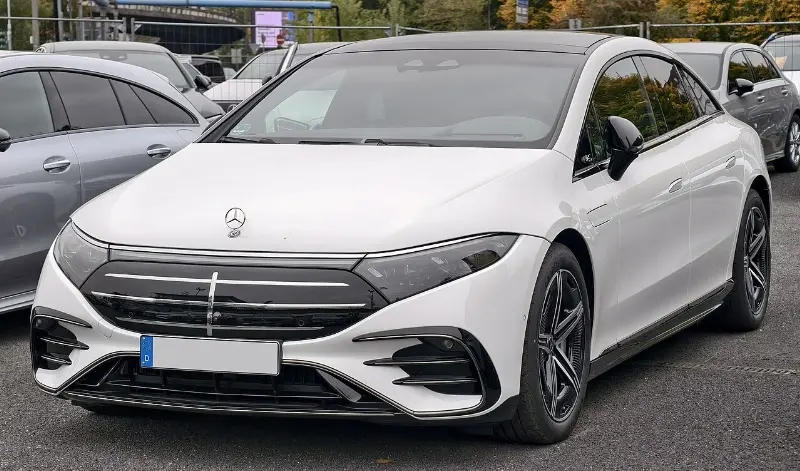
The 2027 Mercedes-Benz EQS 500 4MATIC leads this comparison on EPA range and combined efficiency, while the Lucid Air Sapphire remains a long-range option that also ranks well above the 2027 EV median. For buyers weighing the two on the supplied data, the EQS has the stronger range and energy-use case. These are EPA test-cycle ratings, not promises of real-world driving distance. No NHTSA recall counts were provided, so buyers should check a specific vehicle’s VIN before purchasing.
Key Findings
- The EQS 500 is rated for 443 miles, compared with 427 miles for the Air Sapphire.
- Both ratings exceed the 2027 battery-electric record median of 309 miles; the EQS ranks #11 and the Lucid ranks #17 for range.
- The EQS is rated at 114 MPGe combined, versus 105 MPGe for the Lucid. Both are above the dataset median of 96 MPGe.
- Estimated annual home-charging costs are 644 dollars for the EQS and 699 dollars for the Lucid, under the stated calculation assumptions.
EPA range: the EQS holds the lead
The Mercedes-Benz EQS 500’s EPA range is 443 miles, a higher rating than the Lucid Air Sapphire’s 427 miles. That makes the EQS the stronger choice on the headline range measure. The difference is meaningful for comparing the two EPA records, but it does not guarantee a particular trip distance: weather, speed, terrain, temperature, and driving conditions can affect real-world range.
Both models sit comfortably above the same-year battery-electric median of 309 miles. In the supplied EPA dataset, the EQS ranks #11 among #11 battery-electric model records, while the Air Sapphire ranks #17 among #17. The rank provides broader context: both offer unusually high EPA range relative to the field, with the EQS placed higher.
Efficiency and the EPA comparison
Combined efficiency also favors the EQS. Its rating of 114 MPGe is higher than the Air Sapphire’s 105 MPGe. Against the dataset median of 96 MPGe, both are above the midpoint, and the EQS has the stronger position.
The market ranks tell the same story: the Mercedes is ranked #45 for combined MPGe among #45 battery-electric records, compared with #75 for the Lucid. These rankings describe EPA efficiency within the dataset; they are not reliability scores or measures of driving performance.
City and highway ratings
The Air Sapphire’s EPA city and highway ratings are 108 MPGe and 101 MPGe, respectively. The EQS 500 is rated at 112 MPGe in city driving and 116 MPGe on the highway.
These cycle-specific figures show the Mercedes ahead in both categories in the supplied data. They help frame the combined ratings, but an individual commute or road trip may not reproduce either EPA cycle. Buyers should treat them as standardized comparison figures rather than precise predictions for their own routes.
Home charging estimates
The supplied EVCar calculations estimate annual home-charging costs of 644 dollars for the EQS and 699 dollars for the Air Sapphire. Both estimates assume 644 dollars of driving and use the latest U.S. residential electricity price available to the calculation, applying EPA MPGe.
These are estimates, not quoted utility bills. Actual cost depends on a household’s electricity rate, charging losses, and driving. The inputs supplied here support a comparison under one shared scenario: the EQS estimate is lower, consistent with its higher combined MPGe rating.
At-home charging time in the EPA records
The EPA listing gives a 240-volt charge time of 12.75 hours for the EQS and 13.00 hours for the Air Sapphire. These figures offer a reference for the listed charging scenario, but they do not specify charging speed at public stations or establish how long every charging session will take. The provided data also does not include charging power, battery capacity, or charging-curve details.
Key figures at a glance
| Measure | Mercedes-Benz EQS 500 | Lucid Air Sapphire |
|---|---|---|
| EPA range | 443 miles | 427 miles |
| Range rank among 2027 EV records | #11 | #17 |
| Combined efficiency | 114 MPGe | 105 MPGe |
| Combined MPGe rank | #45 | #75 |
| City efficiency | 112 MPGe | 108 MPGe |
| Highway efficiency | 116 MPGe | 101 MPGe |
| Estimated annual home charging | 644 dollars | 699 dollars |
| EPA 240V charge time | 12.75 hours | 13.00 hours |
Which model suits which buyer?
On the evidence supplied, the EQS 500 suits a buyer prioritizing the higher EPA range, stronger combined MPGe, and lower modeled home-charging cost. It leads the Lucid on each of those comparisons and ranks higher in both range and combined efficiency across the same-year EPA field.
The Air Sapphire remains a compelling alternative for someone whose shortlist already includes it and who wants a model with an EPA range well above the field median. Its EPA rating is lower than the EQS’s, but it still ranks near the top of the supplied model-year range records. The facts here do not include purchase prices, performance specifications, interior features, or equipment, so they cannot establish which car is the better overall value or better fit beyond the listed efficiency and charging measures.
Recalls: check the specific vehicle
No model-year NHTSA recall counts were included in the supplied facts. That means this comparison cannot report a recall count for either model, and the absence of a count here should not be read as evidence about safety or reliability. Before buying, check the vehicle identification number through NHTSA’s recall lookup to see whether campaigns apply to the specific car.
Frequently Asked Questions
Which car has the higher EPA range?
The Mercedes-Benz EQS 500 is rated at 443 miles, compared with 427 miles for the Lucid Air Sapphire.
How do both models compare with the 2027 EV range median?
Both exceed the supplied median of 309 miles. The EQS ranks #11 and the Lucid ranks #17 among the battery-electric records in the dataset.
Which has the higher combined MPGe?
The EQS is rated at 114 MPGe, while the Air Sapphire is rated at 105 MPGe.
Are recall counts available for this comparison?
No. The supplied facts contain no recall counts. Check the VIN on NHTSA.gov for recall information about a particular vehicle.
Conclusion: the EQS leads on the supplied numbers
The 2027 Mercedes-Benz EQS 500 comes out ahead of the Lucid Air Sapphire on EPA range, combined and cycle-specific efficiency, and estimated annual home-charging cost. The Lucid still offers a range rating well above the same-year median, so the comparison is between two high-range entries rather than a long-range model and a typical EV. Choose between them using the EQS’s stronger figures as a starting point, then consider vehicle-specific priorities that are not covered by these data. Treat EPA ratings as standardized estimates, and verify recall status by VIN.
Data Sources
- EPA, fueleconomy.gov vehicle data: vehicle database. Retrieved November 17, 2026.
- EVCar calculations using the EPA dataset: model-year range and MPGe ranks and medians; estimated annual home-charging costs based on EPA MPGe and the stated driving assumption.
- U.S. Energy Information Administration residential electricity price series used for the charging estimates. Retrieved November 12, 2026.
- NHTSA recall information: no model-year count was supplied for either vehicle; check the vehicle VIN using NHTSA’s recall lookup.