Electric Vehicles · EVCar Data Desk
Does the EQS 500’s Range Make It a Strong Long-Distance EV?
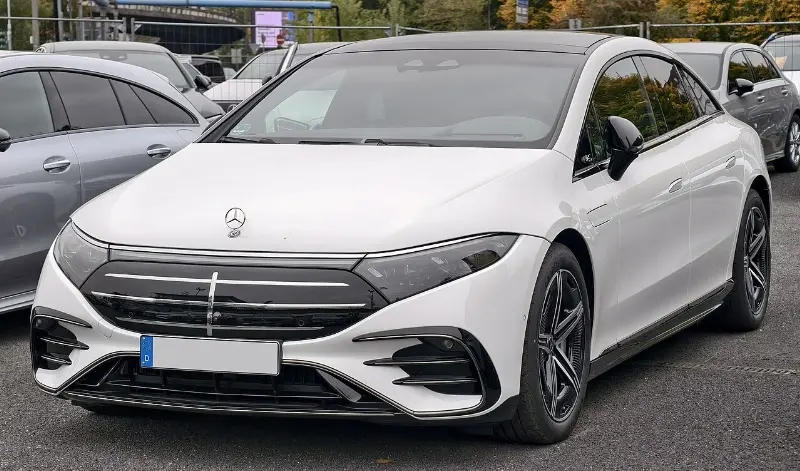
The 2027 Mercedes-Benz EQS 500 4MATIC stands out for its EPA range: its rating is well above the 2027 battery-electric field median and places it near the top of that dataset. Its combined efficiency also exceeds the field median, though its range rank is stronger than its efficiency rank. For shoppers considering this exact trim, the EPA figures make it a promising choice for covering long distances between charges; they do not predict every driver’s real-world range, and the supplied data contains no NHTSA recall count.
Key Findings
- The EQS 500 4MATIC has an EPA range of 443 miles, ranked #5 among the #5 battery-electric model records for the year in the dataset.
- That range is above the field median of 310 miles.
- Its combined rating is 114 MPGe, above the 95 MPGe median and ranked #31 in the field.
- The EPA lists city and highway efficiency at 112 MPGe and 116 MPGe, respectively.
- The supplied EPA figure for charging on a 240V connection is 12.75 hours. No NHTSA campaign count was supplied, so check a specific vehicle’s VIN through NHTSA.
Where the EQS 500’s range sits
The EPA rates this trim at 443 miles of range. In EVCar’s comparison of the year’s battery-electric entries, it ranks #5 among #5 records, while the median is 310 miles. That places the EQS 500 well above the middle of the field and close to its leading end.
For a buyer, a high EPA range rating can mean fewer charging stops on a comparable journey than a lower-rated vehicle might require. It is a standardized estimate, not a promise of the distance available on every trip. Actual range can vary with driving conditions and vehicle use, so the rating is best used to compare models on a consistent basis.
Range and efficiency tell different parts of the story
The EQS 500 records 114 MPGe combined. EVCar’s dataset comparison puts that at #31 among the year’s #31 battery-electric records, above the median of 95 MPGe. The difference between its strong range position and its still-above-median efficiency position shows why those measures should not be treated as interchangeable: range describes rated distance, while MPGe provides an efficiency comparison.
The city rating is 112 MPGe, and the highway rating is 116 MPGe. Both are EPA estimates. The supplied figures do not establish how the car will perform on a particular route, and they do not provide a comparison with another EQS trim.
Key EPA figures at a glance
| Measure | 2027 EQS 500 4MATIC | Context |
|---|---|---|
| EPA range | 443 miles | Ranked #5 in the year’s battery-electric records; median 310 miles |
| Combined efficiency | 114 MPGe | Ranked #31; median 95 MPGe |
| City efficiency | 112 MPGe | EPA rating |
| Highway efficiency | 116 MPGe | EPA rating |
| EPA 240V charging time | 12.75 hours | EPA listing |
| Estimated annual home-charging cost | 644 dollars | Estimate for 644 dollars using the latest U.S. residential electricity price in the calculation |
What the charging figures can and cannot tell you
The EPA listing gives a 12.75 hours charge-time figure for a 240V connection. It gives shoppers a reference point for the listed charging scenario, but the supplied information does not describe charging speed across different battery levels or establish how long a real charging session will take in every setting.
EVCar estimates annual home-charging cost at 644 dollars for 644 dollars, using the latest U.S. residential electricity price in its calculation and EPA MPGe. Treat this as a standardized estimate, not a quote for a household’s utility bill. Electricity rates and charging habits can differ, and the input does not include a local rate or public-charging costs.
Which shoppers may find this trim appealing
The EQS 500 4MATIC may suit buyers who prioritize a high EPA range rating and want an efficiency figure that is also above the dataset median. Its range rank is especially strong, while its combined MPGe rank is more modest by comparison. Those positions help frame its strengths without implying that it leads every measure.
Shoppers deciding between this car and another EV should compare the exact trims and EPA ratings they are considering. The supplied facts cover only this EQS configuration; they do not establish how another trim, wheel setup, or vehicle compares. Buyers should also account for how their own driving and charging access fit the EPA estimates.
Recall information and vehicle-specific checks
No NHTSA recall count is included in the supplied facts for this model year and trim. That absence does not establish that there are no campaigns on file, and a recall count would not measure reliability. Before buying a particular vehicle, use its VIN to check NHTSA’s recall database for applicable campaigns.
Frequently Asked Questions
What is the EPA range of the 2027 EQS 500 4MATIC?
The EPA range rating is 443 miles. EPA range is a test-cycle estimate, not a guarantee of real-world distance.
How does its range compare with the 2027 EV field?
EVCar’s comparison ranks it #5 among #5 battery-electric model records, against a median of 310 miles.
What is its combined MPGe rating?
The combined rating is 114 MPGe. In the same dataset comparison, its rank is #31, and the field median is 95 MPGe.
How long does the EPA list for charging on 240V?
The listed EPA figure is 12.75 hours. The supplied data does not specify charging times for other conditions or equipment.
How many recalls are listed for this model year?
No recall count was supplied, so this article cannot report one. Check the VIN of the specific car in NHTSA’s recall database.
Conclusion: a range leader with above-median efficiency
The 2027 Mercedes-Benz EQS 500 4MATIC combines an EPA range of 443 miles with combined efficiency of 114 MPGe. Its range ranks #5 in the year’s battery-electric dataset, while its efficiency ranks #31; both figures are above their respective field medians. Those ratings make it a compelling candidate for shoppers focused on rated distance and efficiency. Use them as comparison tools, consider the limits of EPA estimates, and check any prospective car’s VIN for recall information.
Data Sources
- EPA, vehicle data for range, MPGe, and 240V charge time, retrieved November 11, 2026: fueleconomy.gov vehicle data.
- EVCar calculations from the EPA dataset for field ranks and medians, and from EPA MPGe plus U.S. residential electricity pricing for estimated home-charging cost.
- U.S. Energy Information Administration residential electricity price series, retrieved November 4, 2026: EIA price series.
- NHTSA recall information was not provided for this profile. Check a vehicle’s VIN at NHTSA.gov.