EV Charging Stations · EVCar Data Desk
What It Costs to Charge the Mach-E RWD Extended
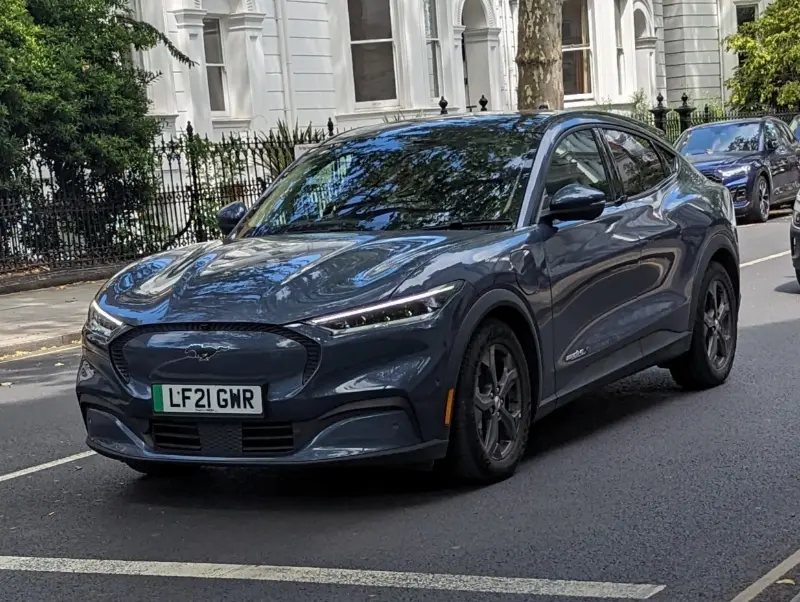
At the supplied U.S. residential electricity price, the 2026 Ford Mustang Mach-E RWD Extended works out to a calculated home-charging cost of 5.56 dollars per 30.6 kWh, or about five and a half cents per mile. Across its EPA-rated range, the estimated energy cost is 17.79 dollars. These are estimates based on EPA energy-use data and the national residential electricity price, so a buyer’s actual bill depends on local rates and charging conditions.
Key Findings
- The EPA rates this configuration at 110 MPGe combined and lists an estimated use of 30.6 kWh per 30.6 kWh.
- Using the supplied residential electricity price of 18.1600 cents/kWh, the calculated energy cost is 5.56 dollars per 30.6 kWh.
- The EPA range is 320 miles; applying the same electricity-price assumption gives a modeled range-energy cost of 17.79 dollars.
- The per-mile estimate is about five and a half cents, derived from the per-distance cost rather than a separate utility tariff.
How the Home-Charging Estimate Is Calculated
The estimate combines the EPA’s energy-use figure with the EIA’s national residential electricity price. The vehicle is listed at 30.6 kWh per 30.6 kWh. Multiplying that energy use by 18.1600 cents/kWh produces the supplied estimate of 5.56 dollars for that distance.
Dividing the per-distance estimate by the distance gives an approximate cost of five and a half cents per mile. This is a convenient way to compare energy costs across driving distances, but it remains a calculation based on the stated inputs. It does not represent a separate measurement of a household’s utility bill.
What the Full-Range Figure Means
The EPA lists a range of 320 miles. The supplied full-range estimate applies the same residential electricity-price assumption to the energy associated with that rated distance, yielding 17.79 dollars.
Read this as an energy-cost model for the EPA-rated range, not a promise that every charging session will cost that amount or that the vehicle will travel that distance in every situation. The figure is not a quote from an electricity provider. It also does not include any charges beyond the residential energy price used in the calculation.
Efficiency and Range in Context
The EPA rating of 110 MPGe is a standardized efficiency measure. The accompanying estimate of 30.6 kWh per 30.6 kWh is more directly useful for estimating electricity costs: it expresses the energy attributed to a set driving distance, which can be paired with an electricity price.
The range figure and the efficiency figure answer different questions. The 320-mile rating describes the EPA’s estimated distance on a charge under its test procedures. MPGe describes efficiency using the EPA’s comparison scale. Neither is a guarantee of real-world range or energy use; actual results can vary with driving and conditions.
Who May Find This Cost Useful
This estimate can help a buyer who expects to charge at home and wants a simple energy-cost baseline. The per-mile figure is useful for thinking about routine driving, while the per-30.6 kWh figure makes it easier to compare against another vehicle’s estimate when both calculations use consistent electricity-price assumptions.
The range-based amount may also help frame the energy cost of a long drive, but it should be treated as a model rather than a trip budget. A buyer should substitute their own utility rate if it differs from the national residential figure used here.
Key Figures at a Glance
| Measure | Figure | How to read it |
|---|---|---|
| EPA combined efficiency | 110 MPGe | Standardized EPA efficiency rating |
| EPA energy use | 30.6 kWh per 30.6 kWh | Energy-use basis for the cost estimate |
| Residential electricity price | 18.1600 cents/kWh | Supplied U.S. average used in the calculation |
| Charging cost per 30.6 kWh | 5.56 dollars | Calculated energy cost at the stated rate |
| Approximate cost per mile | About five and a half cents | Derived from the per-distance estimate |
| EPA range | 320 miles | EPA-rated range estimate |
| Estimated energy cost across EPA range | 17.79 dollars | Modeled using the stated residential electricity price |
Limits of the Estimate
The calculation uses the supplied EPA energy-use value and national residential electricity price. A household’s applicable rate may differ, so its cost per mile and cost across the EPA-rated range may also differ. The figures describe estimated energy expense under those assumptions; they do not establish the cost of a specific charging session.
The EPA efficiency and range figures are test-cycle ratings. Real-world energy use and range can vary, and this data does not provide a separate real-world result. The supplied facts also do not identify public charging prices or other charges, so this article does not estimate them.
Frequently Asked Questions
What is the estimated home-charging cost per mile?
Using the supplied per-distance estimate, it is about five and a half cents per mile. That calculation uses the national residential electricity price provided here.
How much does the EPA-rated range cost in electricity?
The modeled cost across the EPA range of 320 miles is 17.79 dollars, assuming the stated residential electricity price.
What electricity price is used?
The calculation uses the U.S. residential price of 18.1600 cents/kWh supplied for this estimate. A different local rate would change the result.
Does the EPA range guarantee that distance in everyday driving?
No. The 320-mile figure is an EPA test-cycle estimate. Real-world range can vary, and the supplied facts do not provide a separate real-world range result.
Conclusion: A Low-Cost Home-Charging Baseline
With the supplied national electricity-price assumption, the 2026 Mustang Mach-E RWD Extended comes to 5.56 dollars per 30.6 kWh and 17.79 dollars across its EPA-rated range. Those figures offer a clear comparison baseline for a buyer who expects to charge at home. Use a local electricity rate for a more tailored estimate, and treat the EPA range as a standardized rating rather than a guaranteed real-world distance.
Data Sources
- EPA, vehicle efficiency, energy use, and range data from fueleconomy.gov, retrieved November 12, 2026.
- U.S. Energy Information Administration, residential electricity price data from EIA, retrieved November 12, 2026.