Electric Vehicles · EVCar Data Desk
Is the Mach-E RWD Extended a Strong Range Pick?
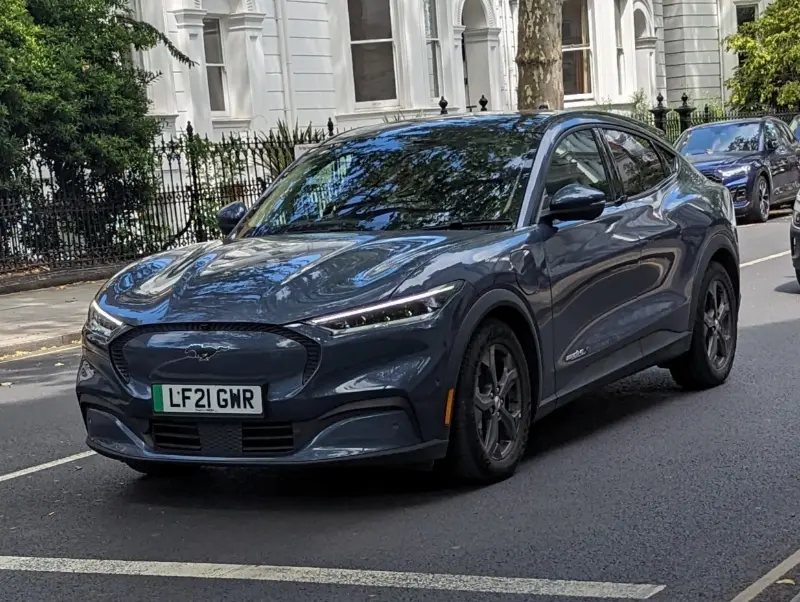
The 2026 Ford Mustang Mach-E RWD Extended stands out for shoppers who want more EPA-rated range than the typical battery-electric model in its model-year dataset. Its efficiency rating is also above that dataset’s median, giving buyers a useful combination of range and energy use. These are EPA test-cycle figures, not a promise of what every driver will achieve; actual results depend on conditions and use. The supplied data offers no recall count, so check a vehicle’s VIN through NHTSA before buying.
Key Findings
- The EPA rates this trim at 320 miles of range, above the 297 miles median for battery-electric #88 among the #88 model records in the dataset.
- Combined efficiency is 110 MPGe, above the dataset median of 91 MPGe; its efficiency position is #56 among those records.
- The EPA city and highway ratings are 115 MPGe and 104 MPGe, respectively.
- EVCar estimates annual home-charging cost at 668 dollars under its stated annual-distance and national electricity-price assumptions. This is an estimate, not a household quote.
EPA Range: Above the Dataset Median
The trim’s 320 miles EPA range places it above the 297 miles median for the model-year battery-electric records used in the calculation. Its range rank is #88 within a field of #88 records, where the first position represents the longest range.
That context helps frame the rating: the Mach-E RWD Extended offers more rated range than the midpoint of this dataset, though it is not among its very longest-range entries. For a buyer comparing electric vehicles, that can make the trim a sensible candidate when range matters but a top-ranked figure is not the only goal. The rank describes the supplied EPA dataset, not every configuration sold in every market.
An EPA range is a standardized test-cycle rating. It cannot guarantee a particular trip distance in everyday driving. The supplied facts do not include real-world measurements, so buyers should treat the figure as a comparison point rather than an assured outcome.
Efficiency Adds Useful Context
The combined rating is 110 MPGe, compared with a dataset median of 91 MPGe. The EVCar calculation ranks this trim #56 among the same #56 battery-electric model records, with the first position indicating the highest efficiency.
MPGe is a way to compare energy consumption with the energy equivalent of a gallon of gasoline. It does not mean the vehicle uses gasoline, and it is not a direct prediction of a driver’s electricity bill. Electricity rates, charging losses, and driving conditions affect what an owner pays and how far the vehicle travels on a charge.
The stronger-than-median efficiency result complements the range rating. Buyers comparing vehicles should consider both: range indicates the EPA-rated distance on a full charge, while MPGe provides a standardized energy-efficiency comparison. Neither figure alone determines the cost of a specific owner’s charging.
City and Highway Ratings
The EPA lists 115 MPGe in city driving and 104 MPGe on the highway. The city figure is higher in this test-cycle data. These ratings help explain the combined result, but they should not be read as a guarantee that city use will always be more efficient for a particular driver.
Route, speed, temperature, driving style, and other conditions can affect actual energy use. The supplied facts do not quantify those effects or provide a real-world range test. Shoppers who spend substantial time on highways should therefore use the highway rating as a relevant comparison point while recognizing that it remains an EPA rating.
At-a-Glance Figures
| Measure | EPA or EVCar figure | How to read it |
|---|---|---|
| EPA range | 320 miles | Above the dataset median |
| Range position | #88 of #88 | First is longest range |
| Combined efficiency | 110 MPGe | Above the dataset median |
| Efficiency position | #56 of #56 | First is most efficient |
| City efficiency | 115 MPGe | EPA city-cycle rating |
| Highway efficiency | 104 MPGe | EPA highway-cycle rating |
| Estimated annual home-charging cost | 668 dollars | EVCar estimate using its stated assumptions |
Home-Charging Cost Is an Estimate
EVCar estimates an annual home-charging cost of 668 dollars, calculated from EPA efficiency and the latest U.S. residential electricity price available in the supplied data. The estimate assumes 668 dollars of annual driving. It can help with broad comparisons, but it is not a personalized projection.
A household’s actual cost depends on its electricity rate and driving. The estimate also should not be mistaken for a quoted tariff or an all-in ownership cost. The supplied facts do not include a purchase price, public-charging costs, or other ownership expenses, so they cannot establish the Mach-E’s total cost of ownership.
Charging-Time Figure and Its Limits
The EPA dataset lists a 9.60 hours charging time at 9.60 hours. This provides a specific reference point in the EPA record. It does not, by itself, describe every charging setup or predict how long a particular owner’s session will take.
The supplied facts do not provide charging speeds, public fast-charging times, or details about home equipment. Buyers should use the stated figure as a dataset specification and confirm the charging details relevant to their intended setup before making a purchase decision.
Recall Information and Buyer Checks
No NHTSA recall count is included in the supplied facts. That means this profile cannot characterize the trim’s recall status or draw conclusions about reliability. Recall counts, when available, are campaign records and are not reliability scores.
Before purchasing a specific vehicle, check its VIN through NHTSA’s recall lookup. A VIN check can address the vehicle being considered; the EPA figures in this profile describe the listed trim’s test-cycle ratings.
Frequently Asked Questions
What EPA range does this Mach-E trim have?
The EPA rating is 320 miles. It is a test-cycle estimate, not a guaranteed real-world trip distance.
How does its range compare with the dataset median?
Its rating is above the 297 miles median in the supplied battery-electric model-year dataset. The EVCar calculation places it at #88 among #88 records.
What is its combined efficiency rating?
The combined EPA rating is 110 MPGe. The supplied dataset median is 91 MPGe.
How much might home charging cost annually?
EVCar estimates 668 dollars under its stated assumptions, including 668 dollars of annual driving and the latest U.S. residential electricity price used in its calculation. Personal costs vary with local rates and use.
Conclusion: A Range and Efficiency Case
The 2026 Ford Mustang Mach-E RWD Extended combines above-median EPA range with above-median combined efficiency in the supplied model-year dataset. Those figures make it worth considering for buyers weighing usable rated range against energy efficiency. The EPA ratings and EVCar charging-cost estimate are comparison tools, not promises about real-world results or individual bills. Since no recall count is provided here, check the VIN through NHTSA when assessing a specific vehicle.
Data Sources
- EPA fuel-economy vehicle dataset, including range, MPGe, and charging-time figures; retrieved November 17, 2026.
- EVCar calculations using the EPA dataset for range and efficiency rankings, dataset medians, and estimated home-charging cost. The cost estimate uses the EIA U.S. residential electricity price series, retrieved November 12, 2026.
- NHTSA recall information was not included in the supplied facts. Buyers can check a vehicle VIN using NHTSA’s recall lookup.