EV Maintenance Tips · EVCar Data Desk
Model 3 Premium RWD: An EPA-Based Maintenance and Recall Checklist
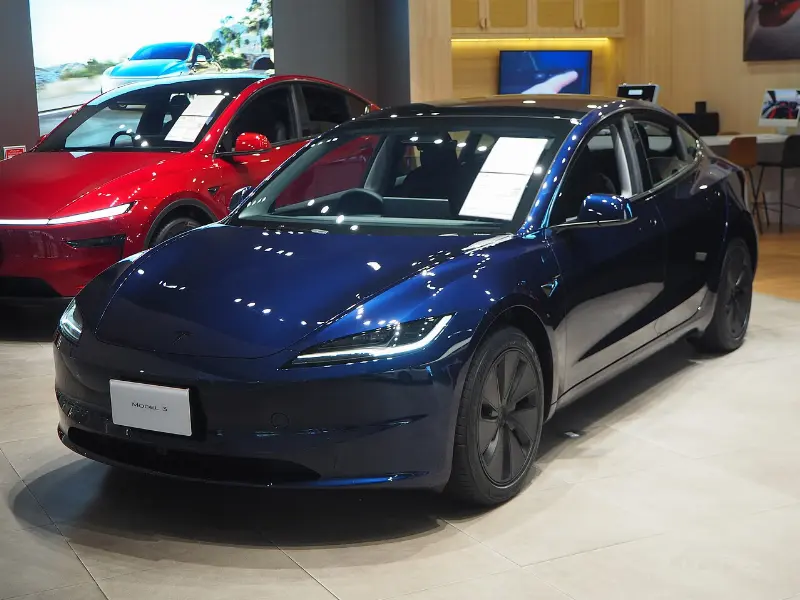
The 2027 Tesla Model 3 Premium RWD pairs long EPA-rated range with especially strong efficiency, making it a compelling option for buyers who want to plan trips and home charging around published benchmarks. Its EPA range is 363 miles, and its combined rating is 134 MPGe. Those figures help frame energy use and driving expectations, but they do not specify a maintenance schedule or establish the car’s reliability. For upkeep and safety campaigns, use the vehicle’s owner information and check its VIN in NHTSA’s recall database.
Key Findings
- The EPA rates this Model 3 at 363 miles of range, above the 310 miles median among battery-electric model records for the same year in the dataset.
- Its combined efficiency rating is 134 MPGe, ranked #2 in that dataset; the field median is 95 MPGe.
- The EPA city and highway ratings are 142 MPGe and 125 MPGe, respectively. These are test-cycle ratings, not promises about an individual trip.
- An EVCar calculation estimates annual home-charging cost at 548 dollars for the stated driving assumption and electricity-price input. Actual cost varies with use and the buyer’s electricity rate.
- The supplied facts contain no NHTSA recall count for this vehicle. Check the VIN at NHTSA.gov and follow any campaign instructions that apply.
What the EPA Ratings Say About Ownership
The range and MPGe figures offer useful planning context. The EPA’s 363-mile rating places this Model 3 above the same-year dataset median of 310 miles. Its range rank is #36 among the dataset’s #36 battery-electric model records. That rank supplies market context, while the range rating gives a standardized comparison point.
Efficiency is a particular strength in this data. The combined rating of 134 MPGe is ranked #2 in the same field, well above its 95-MPGe median. Buyers comparing energy use can treat that as a favorable EPA benchmark, while remembering that MPGe is a standardized measure and does not predict a specific household’s bill or a particular driver’s range.
These ratings are not maintenance instructions. They do not identify inspection intervals, tire specifications, repair needs, battery warranty coverage, or service costs. For those details, consult the documentation for the exact vehicle and its current configuration.
At-a-Glance Figures
| Measure | Supplied figure | How to use it |
|---|---|---|
| EPA range | 363 miles | Standardized range estimate for comparison and trip planning |
| Range rank | #36 of #36 records | Same-year battery-electric dataset context |
| Combined efficiency | 134 MPGe | EPA combined-cycle efficiency benchmark |
| Efficiency rank | #2 of #2 records | Same-year dataset context |
| City / highway efficiency | 142 MPGe / 125 MPGe | Separate EPA test-cycle ratings |
| EPA 240V charging-time estimate | 11.70 hours | EPA-listed estimate; not a universal charging-time guarantee |
| Estimated annual home-charging cost | 548 dollars | EVCar estimate using the stated annual-driving assumption and EIA electricity-price input |
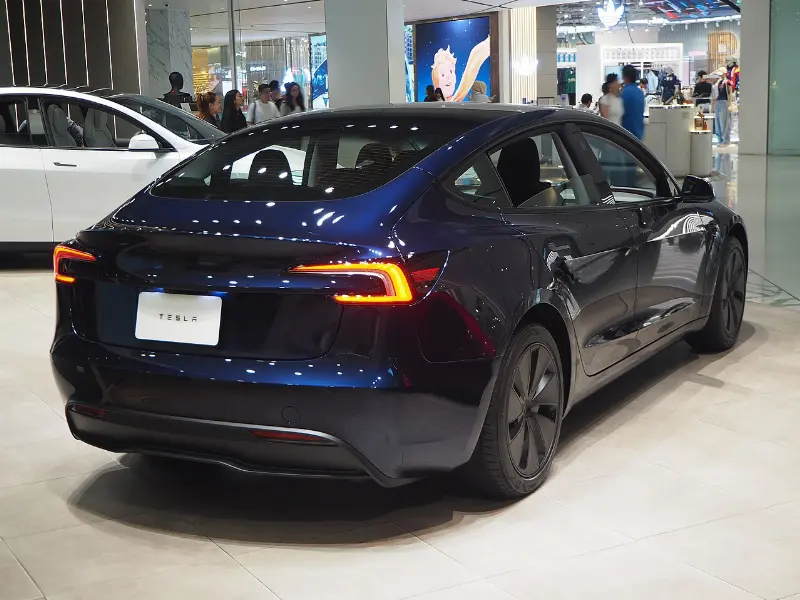
Practical Maintenance Checklist
The supplied EPA data supports energy and charging comparisons, but it does not provide a maintenance calendar. Use this checklist as a set of items to confirm against the owner’s manual and the vehicle’s own alerts:
- Review vehicle alerts and maintenance guidance. Follow instructions shown in the vehicle and the documentation for its model year. The EPA ratings do not specify service intervals.
- Keep tires under observation. Check their condition and inflation using the vehicle’s displayed guidance and owner documentation. No tire pressure, rotation schedule, or replacement interval is included in the supplied facts.
- Check braking and exterior condition. Pay attention to changes in braking behavior, visible damage, and warning messages. The provided figures cannot diagnose a component or determine when a repair is due.
- Inspect charging equipment and connections. Use compatible equipment and follow Tesla’s instructions. The EPA’s 11.70-hour 240V estimate is a standardized listing, not a guarantee for every charger, starting battery state, or charging condition.
- Plan trips with a margin. Treat the EPA range as a comparison benchmark. Actual distance available can differ with conditions and usage, so use the car’s current displayed estimate and trip-planning tools for a particular journey.
- Confirm campaign completion by VIN. Search NHTSA’s recall database and contact Tesla if a campaign applies. The supplied information does not include a recall count or campaign list.
Recall Checks: Use the VIN
No NHTSA recall fact was supplied for this Model 3, so there is no supported campaign count to report here. That absence from the provided data does not establish whether a particular vehicle has an open campaign. Search the vehicle identification number in NHTSA’s recall lookup, then follow the instructions for any applicable recall and confirm its completion with Tesla.
A recall count describes campaigns listed for a model year; it is not a reliability score. A vehicle-specific VIN search is the practical check for a buyer or owner. Also review the vehicle’s own notices and ask the seller or service provider for documentation of completed recall work.
Charging Cost and Efficiency in Context
The supplied EVCar calculation estimates home-charging cost at 548 dollars for 548 dollars, using the latest U.S. residential electricity price input identified in the calculation. This is a modeled estimate, not a quote for a particular utility account. Electricity rates, driving distance, and charging patterns affect actual spending.
The high combined MPGe rating helps explain why the Model 3 stands out in the dataset’s efficiency comparison, but it does not settle a household’s total ownership costs. The provided facts do not include purchase price, insurance, maintenance pricing, or charging costs away from home. Buyers should use the estimate as one limited input and check their own electricity rate.
Who This Model May Suit
This version may suit buyers who value an EPA range above the same-year dataset median and a combined efficiency rating near the top of that field. Its city rating of 142 MPGe exceeds its highway rating of 125 MPGe; both are test-cycle results, so a buyer should use route-specific estimates for actual travel planning.
Buyers who need a precise service schedule, a repair budget, or confirmation of recall status will need information beyond these EPA and calculation facts. Check the exact vehicle’s documentation and VIN before purchase, and rely on its current maintenance guidance after delivery.
Frequently Asked Questions
What EPA range is listed for the 2027 Model 3 Premium RWD?
The supplied EPA listing gives it 363 miles of range. This is a test-cycle rating, not a guaranteed real-world distance.
How does its efficiency compare with other same-year EV records?
Its combined rating is 134 MPGe, ranked #2 among the supplied dataset’s #2 battery-electric model records. The median combined rating is 95 MPGe.
How long is the EPA-listed 240V charging estimate?
The supplied EPA figure is 11.70 hours. Actual charging time depends on conditions and equipment; consult the vehicle and charger instructions for practical guidance.
How many recalls are reported for this model year?
No recall count was included in the supplied facts. Check the vehicle’s VIN in NHTSA’s recall database for applicable campaigns.
Does the EPA data provide a maintenance schedule?
No. The supplied facts cover EPA efficiency, range, a charging estimate, and a modeled home-charging cost. Use the owner’s manual and vehicle guidance for maintenance instructions.
Conclusion: A Useful Checklist Starts with the VIN and Owner Guidance
The Model 3 Premium RWD posts strong EPA range and efficiency figures, with both ratings above their same-year dataset medians. Those numbers can help buyers compare energy use and plan, but they do not replace real-world trip estimates, vehicle-specific maintenance guidance, or a VIN-based recall search. For ownership, follow the car’s instructions, monitor its alerts and condition, and verify any recall campaign directly.
Data Sources
- EPA, Fuel Economy data file: https://fueleconomy.gov/feg/epadata/vehicles.csv. Vehicle ratings and charging estimate retrieved 2026-11-12.
- EVCar calculations based on EPA dataset records: same-year range and efficiency ranks, medians, and estimated annual home-charging cost.
- EIA, U.S. residential electricity price series: https://api.eia.gov/v2/seriesid/ELEC.PRICE.US-RES.M. Input identified for the charging-cost calculation, retrieved 2026-11-12.
- NHTSA recall lookup: https://www.nhtsa.gov/recalls. Check by VIN; no recall count was supplied for this article.