Electric Vehicles · EVCar Data Desk
Is the Rivian R1S Standard’s Range Worth Its Efficiency Tradeoff?
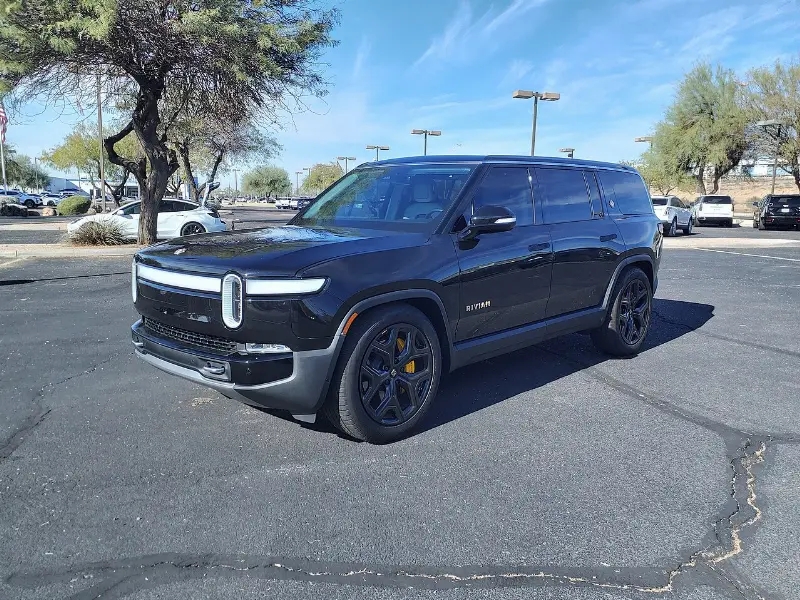
The 2022 Rivian R1S Standard pairs a substantial EPA range with an efficiency rating below the median for battery-electric vehicles in its model year. Its range is rated at 316 miles, placing it at #18 among the #18 in the EPA dataset. The tradeoff is an EPA combined rating of 69 MPGe, ranked #85 in that same field. For buyers weighing range against energy use, this exact trim favors the former.
Key Findings
- EPA rates the R1S Standard at 316 miles, above the model-year dataset median of 258 miles.
- Its range rank is #18 among #18, based on the EPA dataset comparison.
- Combined efficiency is 69 MPGe, below the dataset median of 96 MPGe; its efficiency rank is #85.
- The EPA city and highway ratings are 73 MPGe and 65 MPGe, respectively.
- The supplied EPA record gives a 13.00 hours Level 2 charge-time figure. No model-year recall count was supplied, so buyers should check a specific vehicle’s VIN through NHTSA.
Where the R1S Standard’s Range Sits
The EPA range rating gives the R1S Standard a stronger range position than its efficiency position. Its 316 miles exceeds the model-year dataset median of 258 miles. EVCar’s calculation ranks it #18 across #18 for the year.
That ranking is useful context for shoppers comparing electric vehicles from the same model year: the R1S Standard sits in the upper part of the range field. It does not predict how far a particular owner will travel between charges. The stated figure is an EPA test-cycle rating, and real-world range can differ with driving and conditions.
Efficiency Is the Tradeoff
The combined EPA efficiency rating is 69 MPGe. The model-year median is 96 MPGe, and the R1S Standard ranks #85 among #85. In this dataset, its range rating compares more favorably than its energy-efficiency rating.
MPGe is an EPA measure for comparing energy efficiency across vehicles; it is not a prediction of an owner’s electricity bill. A shopper prioritizing range may find the range ranking persuasive, while a buyer focused on using less energy per distance should weigh the below-median efficiency result carefully.
City and Highway Ratings
The EPA lists 73 MPGe for city driving and 65 MPGe for highway driving. The city figure is higher than the highway figure in this trim’s test-cycle data. These ratings provide a useful comparison between the EPA’s two driving categories, but they do not establish the efficiency an owner will achieve on a particular route.
Key EPA Figures for This Exact Trim
| Measure | 2022 R1S Standard | Context |
|---|---|---|
| EPA range | 316 miles | Dataset median: 258 miles; rank #18 of #18 |
| Combined efficiency | 69 MPGe | Dataset median: 96 MPGe; rank #85 of #85 |
| City efficiency | 73 MPGe | EPA city rating |
| Highway efficiency | 65 MPGe | EPA highway rating |
| EPA Level 2 charge time | 13.00 hours | EPA-listed 240V charge-time figure |
| Estimated annual home-charging cost | 1064 dollars | EVCar estimate for 1064 dollars using the cited U.S. residential electricity price |
What the Charging and Cost Figures Tell Buyers
The EPA record lists 13.00 hours as the vehicle’s 240V charge time. This is a specific EPA figure, not a guarantee of how long a charging session will take in every home setup. The supplied facts do not include charging speed or details about a particular vehicle’s equipment.
EVCar estimates annual home-charging cost at 1064 dollars, assuming 1064 dollars and the latest cited EIA U.S. residential electricity price available for the calculation. It is an estimate, not an individual quote: actual cost depends on electricity rates and how the vehicle is charged. The supplied figure gives shoppers a consistent reference point, not a promise about their household bill.
Who This Trim May Suit
The R1S Standard may suit a shopper who puts EPA-rated range high on the shortlist and is willing to accept a lower efficiency position in the model-year dataset. Its range is above the median and its rank is stronger than its MPGe rank. Buyers comparing energy use should focus on the combined rating and its below-median market context rather than treating range alone as a complete picture.
The facts supplied describe this exact Standard trim. They do not establish how it compares with other R1S trims in features, price, or equipment. A buyer deciding among versions should verify those details separately instead of assuming they are shared.
Recall Information and Its Limits
No NHTSA model-year recall count was included in the supplied facts. That means this profile cannot report a count or characterize the vehicle’s recall history. Recall counts are records of campaigns, not reliability scores; shoppers considering a specific used vehicle should check its VIN on NHTSA’s website for applicable campaign information.
Frequently Asked Questions
What is the EPA range of the 2022 Rivian R1S Standard?
The EPA range rating is 316 miles. It is a test-cycle rating, and actual driving range can differ.
How does its range compare with other battery-electric models from the year?
EVCar ranks the R1S Standard #18 among #18. Its rating is above the dataset median of 258 miles.
What is its EPA combined efficiency?
The combined rating is 69 MPGe. The dataset median is 96 MPGe, so the R1S Standard falls below the model-year median on this measure.
How much might home charging cost each year?
EVCar estimates 1064 dollars for 1064 dollars using the cited U.S. residential electricity price. Your result may differ with your rate and charging habits.
How many recalls does this model have?
No recall count was supplied for this profile. Check the vehicle’s VIN on NHTSA.gov for applicable recall information.
Conclusion: Range First, With an Efficiency Cost
The 2022 Rivian R1S Standard presents a clear tradeoff in the supplied EPA data: its 316-mile rating sits above the model-year range median, while its 69 MPGe combined rating is below the efficiency median. That makes it a stronger fit for shoppers drawn to its range position than for those prioritizing energy efficiency. Treat EPA figures as comparison tools, use the charging-cost estimate as a reference, and check a specific vehicle’s VIN for recall information.
Data Sources
- EPA vehicle data, including range, MPGe and 240V charge time: fueleconomy.gov vehicle data, retrieved November 18, 2026.
- EVCar calculations for model-year ranks and medians, based on the EPA dataset, and estimated annual home-charging cost based on EPA MPGe and the cited electricity price.
- U.S. Energy Information Administration residential electricity price series used for the charging-cost estimate: EIA electricity price data, retrieved November 12, 2026.
- For vehicle-specific recall information, search the VIN at NHTSA recalls.